And just like that we’re we have reached the festive season …
November and December are significant months for different reasons than you might think. As we enjoy the histories of tradition of watching the skies lite up with pretty colours and bonfires to warm our chilly bodies or start planning for the festive season.
November we celebrated Purple Tuesday – But what is Purple Tuesday is the spending power of disabled people and their household worldwide is currently estimated to be worth $8 trillion, increasing by 14% per annum. Only 10% of businesses have a targeted strategy for this huge market.
It’s a global social movement and the #1 brand for improving the customer experience for disabled people and their families 365 days a year. The movement takes center stage each year on the first Tuesday of November. It serves as a celebratory day, promoting accessibility and inclusivity. In 2022, this impactful event reached an astounding 23 million people,
Did you know…..
There are 1.3 billion disabled people in the world that represent 17% of the population.
75% of disabled people and their families have walked away from a business because of poor accessibility or customer service.
How will you be making this festive season disability inclusive?

The Shaw Trust announced their Disability power 100 for 2023. With the amazingly talented and funny Alex Brooker as host.
The Disability Power 100 is a platform for change. It recognises the most influential disabled people in the UK. It celebrates their ambition and achievements, and provides much needed encouragement to the leaders of tomorrow.
I’ve been extremely honoured to be recognised on this list three times it’s always a huge privilege to be amongst others named on the list.
And we don’t stop there.
At the Shaw Trust Foundation, we’re tackling the disability employment gap by demanding that the strengths and talents of disabled people are recognised and that society is inclusive.
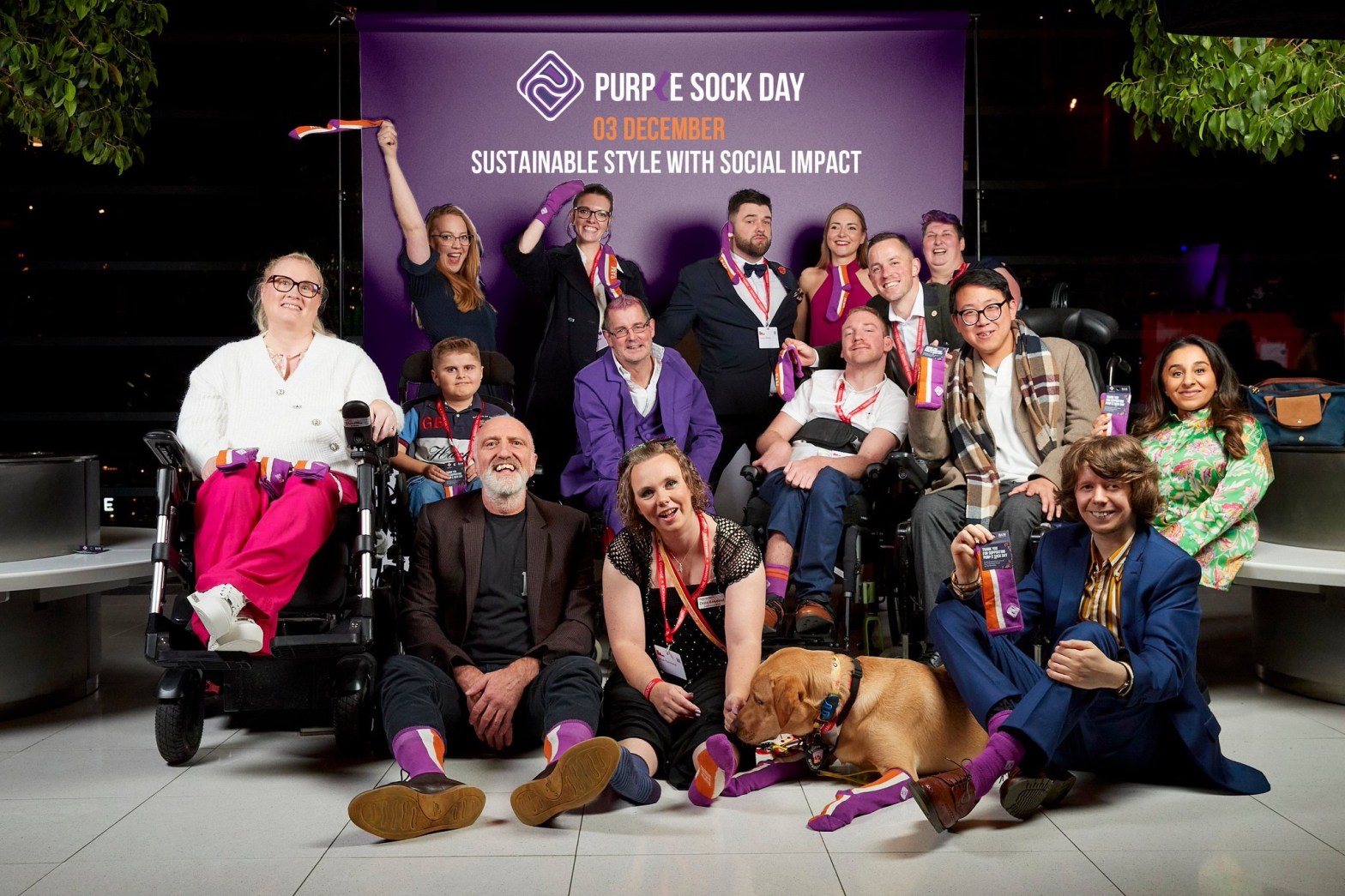
December 3rd is Purple Sock Day this falls on international day of disabled people takes place annually. The day was created by the UN in 1992; with the aims to promote the rights & well-being of disabled people across society & raise awareness of disability in every aspect of political, social, economic & cultural life.
To mark and celebrate this day its simple aim is to engage the nation with one, effortless, single act of united solidarity – to buy & wear a pair of very sexy purple socks. Yes I own a few pairs they are bamboo made and the softest socks I own. Plus there purple.
By owning your own you will help raise positive awareness of disability inclusion; whilst also helping to create a new Parallel Fund to provide grants & professional support to kick-start disability owned businesses and help disabled entrepreneurs.

A great Christmas stocking filler or just to get your purple on click here
Disability history month, between 16th November to 16th December 2023
Here’s a few Disabled History Facts You Probably wouldn’t get taught In School.
1100s – 1500s; In Aztec society, Disabled people were displayed in the royal zoo and tossed scraps of food.
1300s; English monarch introduced a law allowing them to seize the property of people with Disabilities and mental illness.
1500s; Many Disabled women and mothers of Disabled children, were executed during the witch trials. Disability was seen as a badge of evil.
1500s; Henry VIll destroys social and practical support for Disabled people via the dissolution of monasteries.
1843; The character Tiny Tim in a Christmas Carol, reinforces stereotypes to the masses of Disabled people being weak and pitiable.
1890; The Lunacy Act brings in a system of orders to prevent wrongful admissions. Also becomes an offence to unnecessarily restrain a patient.
1845; John Thomas, the son of a British prime minister, sets up The Alleged Lunatics Friend Society after he himself was admitted to an asylum.
1939; An estimated 275,000 Disabled people were killed from 1939 to 1945, as Hitler ordered Aktion T4. The Nazi Euthanasia program.
1944; Employers (with 20 or more employees) had to ensure at least 3% of their workforce was Disabled, at the introduction of the Disabled Persons (employment) Act quota system.
1944; Neurologist Ludwig Guttman sets up the National Spinal Injuries Centre at Stoke Mandeville. This was to treat service people who sustained spinal cord injuries in WW2.
1950; The groundbreaking polio vaccine was developed. Polio cases were around 50,000 in Britain, these numbers began to decline in the 1950s.
1995; The Disability Discrimination Act is introduced as the result of protests and campaigns led by Disabled people.
1995; The first Disabled people were employed by an NHS trust to oversee Disability equality issues. Dave Thompson and Jackie Rotherham.
2003; British Sign Language (BSL) was officially recognised by the government as being a full, independent, language. Thus boosting the training of deaf BSL tutors and interpreters.
2010; The Equality Act is passed in parliament, grouping nine protected characteristics, including Disability.
2011; BBC’s Panorama exposes the physical and psychological abuse suffered by people with learning Disabilities at Winterbourne View. Which was a private hospital in South Gloucestershire. After public outcry, the institution was closed.
Efforts of the Disabled People’s Movement in the last 50 years has led to people increasingly accepting a ‘social model’ approach to disability,
We are writing the Disabled history for future generations to read and learn from.
We need continue the work to improve Disability Rights, not just for those who will being looking back. But for those Disabled people of the future who deserve a peaceful future full of equality.
Until next time
K 💜
 Kerry Thompson - My Life, Kerry's Way.