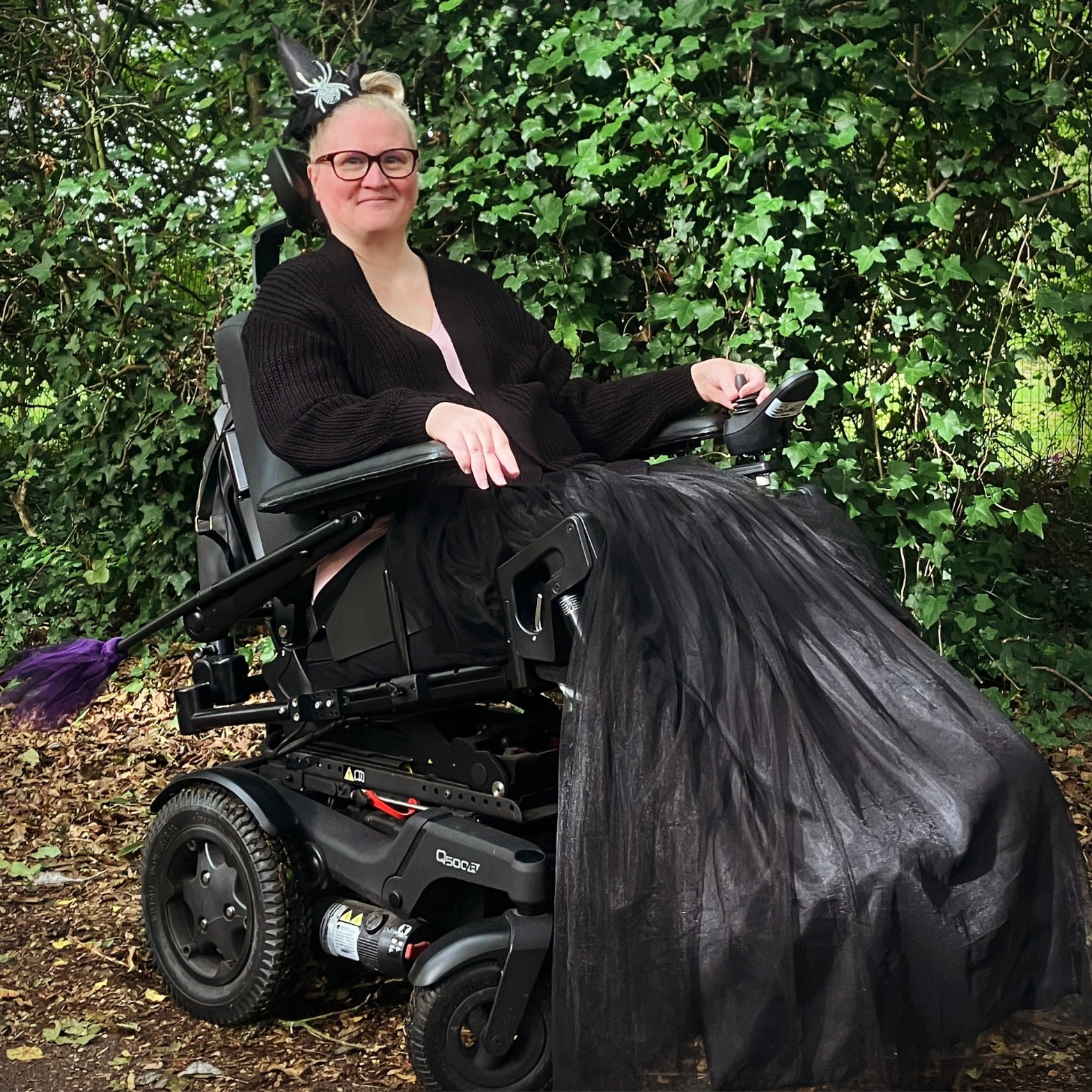
Double, double toil and trouble; Fire burn and caldron bubble.
I love this time of year. Granted, can’t say I love the colder weather or the dark nights but I do love watching the season change. Leaves changing colour from deep reds to yellows and of course it’s Halloween season. Who doesn’t love a bit of spooky?!
We’ve seen the movies, heard the stories and listened to the old wives tales. But how much do we really know about Witchcraft and disability?
There is a historical link between witchcraft and disability; people with disabilities were sometimes accused of witchcraft, and people believed that witchcraft could cause disability. Historians believe that some of those accused of witchcraft were suffering from mental health issues or illness.
Way back then, these types of conditions certainly would not have been understood. And those who experienced them were often assumed to be under the influence of witches or bad spirits. And people with physical disabilities were also sometimes seen with suspicion, For example, any noticeable scars or warts or moles could be seen as the Devil’s mark and proof that someone had made a pact with the Devil.
In early modern English literature, the stereotypical witch was often depicted as an old, deformed, and cantankerous woman. This was based on the belief that a witch’s appearance, demeanor, and suspected curses were evidence of witchcraft.
History shares stories of trials like Janet Horne shes is reported to have been the last person in Scotland to be tried and executed as a witch. In 1727 (or 1722 in some accounts), Janet and her daughter were accused of witchcraft.
According to some sources, neighbours claimed that Janet had transformed her daughter into a pony and rode on her back to go and meet with the Devil. As evidence they said that the daughter’s hands and feet resembled hooves.
Records recorded about her trial Janet is said to have been “an insane old woman” who was “in her dotage”.
History suggests that Janet’s daughter had been born with a condition that affected the shape of her hands and feet. Both were found guilty. Although Janet was executed, her daughter managed to escape from prison.

Finding myself going down a rabbit hole of research into witchcraft and disability had me thinking about my own family and remembering the stories that my mother used to tell me about my great grandmother,
I have always known growing up there is a deeply routed intuitiveness within my family. How far back is unknown. So I decided to find out a little more about my family.
My journey into my family history started with my great grandmother coming from a small place where everyone knows everyone. My great grandmother was called upon to go to peoples houses after they had died to prepare their bodies, but also on the odd occasion was asked to banish unwanted spirits.
My great grandmother was very wary of touching anything wooden from tables and chairs as strange things would happen the moment she would touch them, my nan recalls her grandmother my great great grandmother. Using a round table from her room to use with others for an Ouija board.
As I said before, I don’t know just how far back. My mother is what you would call a hedge witch. A hedge witch is a witch who practices witchcraft in a solitary way, drawing on connections to the earth and its energy and are drawn to plants, trees, and flowers.
My own story I have always felt a presence around me, the feeling of never being alone. I remember when I was young i woke up and my great grandfather was standing at the foot of my bed smiling as if to say goodbye that following day my mum told me my great grandfather had passed away.
Today, the modern day, “witches” in the UK practice a variety of witchcraft, including Wicca a pagan religion.
Wicca is a religion that originated in the 1940s and is based on the worship of pagan gods and goddesses. Wiccans often draw inspiration from ancient cultures, such as Celtic and Anglo-Saxon traditions. They believe in the power to cast spells, and practice magic to heal themselves and others.
We may have moved on from burning “Witches is at the stake”. But unfortunately even the modern witches may face prejudice and be reluctant to share their beliefs. Some say they are still treated as a joke by the media and that calling someone a witch is a derogatory term. Others say they face abuse, intimidation, property damage, and threats of murder.
Between the 1560 and 1700 513 ‘witches’ were put on trial, although only 112 were executed. The last known execution took place in Devon in 1685. It has me wondering just how many of those were accused because they actually had a disability!
until next time K
Have a spooky and fun season 🎃
 Kerry Thompson - My Life, Kerry's Way.